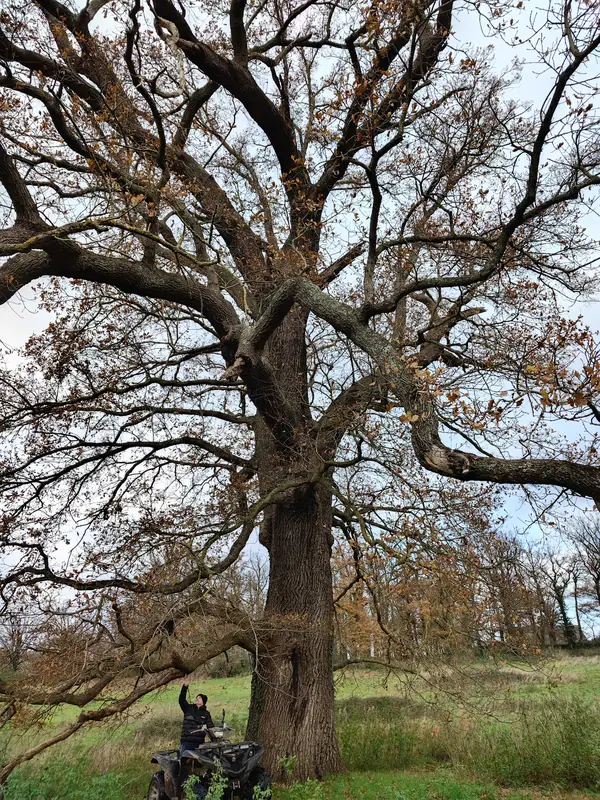
Over 20 hectares of mature oak, chestnut, and beech forest cover the western slopes of the estate. The woodland has been managed for centuries — medieval coppicing gave way to 19th-century parkland planting, and today the estate practices gentle rewilding alongside traditional path maintenance.
Ancient paths wind through cathedral-like clearings where shafts of light pierce the canopy. Veteran oaks — some over 300 years old — host woodpeckers, treecreepers, and owls. The forest floor changes with every season: carpets of bluebells in spring, deep green ferns in summer, golden leaf drifts in autumn, and frost-etched silence in winter. Deer browse the woodland edges at dawn and dusk. Wild boar rootle through the undergrowth. The forest is the estate's living heritage — older than the château itself.